

Blog
30th September 2026
Ale vs Lager: what’s the difference?
New to the world of beer? Welcome to the minefield... you've got a lot to learn! Let's start with the basics.
There are SO many different styles of beer to choose from - sours, stouts, porters, IPAs + more... but, at the heart of it all, are two major beer families: ales and lagers.
Together, they contain over one hundred sub-styles of beer, making up most beers you'll come across.
While ales and lagers use the same core ingredients: hops, water, barley, and yeast, the way they're brewed couldn't be more different. From the type of yeast and types of malt to fermentation temperatures and hopping rates, there's a lot to unpack when it comes to the differences between ales and lagers. Let's start with ales.

What are ales?
Ale is arguably the original beer, stretching back thousands of years to the dawn of civilisation. We'll dive into the specifics soon, but overall, ale is top-fermented beer made primarily from malted barley, hops, water, and yeast.
Ales are generally fermented at warmer temperatures, which helps to create their incredibly diverse range of appearances, flavours, and aromas.
Ales are deeply rooted in English heritage, where they've been brewed and enjoyed for centuries. And, if you ask us, there's nothing quite like a good cask ale – we absolutely love it!
Ale flavour profiles vary enormously as there are many more styles of ale than lager, mostly because it's been brewed in more places over a longer period of time. Some are biscuity, some are spiced or even citrussy. The variety is huge, but overall, ales may be full-bodied, rich, complex, and packed with character, but they may be quenching and sessionable too.

How are ales brewed?
As mentioned, ales are brewed with top-fermenting yeast and have a fermentation process that's typically 10ºC warmer than lagers.
This warmer fermentation means ales can often be fermented and ready more quickly than lagers. At Triple Point, we can turn around a cask ale in as little as two weeks, whereas lagers can take closer to six weeks from brew to glass – another reason we love ale so much... more beer to drink!
So, while both styles start with the same core ingredients - malt, hops, yeast and water - it's the yeast and fermentation process that really set ales apart from lagers.
This warmer fermentation, as well as the yeast strain and brewing process, helps give ales a truly distinctive character. At Triple Point, we have our own unique 'house ale' yeast strain, from which beers such as Gold, Cryo, Astral, and many of our hazy pales are brewed. From fruity aromas to bold and complex flavours – there's so much variety to explore. Ales are seriously impressive.
What is real ale?
You might have heard of the term "real ale"? But... what is that?
The term "real ale" was popularised by the Campaign for Real Ale (CAMRA), founded in 1971, as part of its campaign to protect traditional British beer and pubs from the growing supremacy of mass-produced, chilled, filtered and pasteurised kegged beer.
Fast forward to 2026, and CAMRA is still campaigning in full force - and rightfully so! Mass-produced beer continues to dominate the market, meanwhile independent, craft breweries and pubs that specialise in craft ale are facing intense pressure or even going out of business.
Of course, we're proud to be members of CAMRA and support its campaign to champion real ale across Sheffield and beyond, in whatever way possible. It's independent breweries and pubs, like all our pals here in Sheffield and us, that help keep this tradition alive. So, we need to play our part in spreading awareness of the importance of shopping local and drinking real ale!
Fun fact: our lovely, green city of Sheffield is also known as the "Real Ale Capital of the World". With a thriving independent brewing scene and more breweries per person than anywhere else in the UK, it's a title we're pretty proud of. It makes us even more grateful to have won Best Local Brewery at the Exposed Awards for the third year in a row!
So, what makes a real ale, real?
Real ale is naturally conditioned and contains live yeast. This means it continues to mature in the cask or container, allowing it to develop unique flavours and aromas.
Unlike most mass-produced beer, real ale is traditionally served without filtration or pasteurisation and is generally served at cellar temperature. It's also usually dispensed using a traditional hand-pull pump rather than being pushed through with gas such as CO2.
It's this traditional condition and serving process that gives real ale its distinctive character. And, for us, it's what makes it so special!
PS. Did we mention that Triple Point don't filter or pasteurise ANY of our beers? Ale or lager, cask, keg or can.
What are lagers?
Picture an ice-cold, bubbly, sparkling pint poured at the pub on a sunny afternoon – that's probably a lager! And it's the complete opposite of an ale.
Some of the biggest household lager names include Carling, Madri, or Peroni. But if you ask us, a pint of indie craft lager is where the magic really happens. You can't beat it!
How are lagers brewed?
Lagers are brewed using bottom-fermenting yeast. That literally means what it sounds like - the yeast works its magic at the bottom of the fermentation tank, naturally collecting there when it's done.
They're also cold-fermented beers, brewed at much cooler temperatures than ales, typically around 10-13°C.
This slower, cooler fermentation allows the malt and hop characteristics to shine through more than the fruitier notes you might find in an ale. This results in a clean, crisp, and refreshing beer you want to slurp down in the sun.
To get that crispness, lagers are more highly carbonated, which helps create a refreshing mouthfeel.

What do lagers taste like?
There's no one answer to this - one lager can taste completely different to another. From Bavarian and Bohemian dark lagers to Mexican-style light lagers, the world of lagers is diverse, with a style for pretty much every palate.
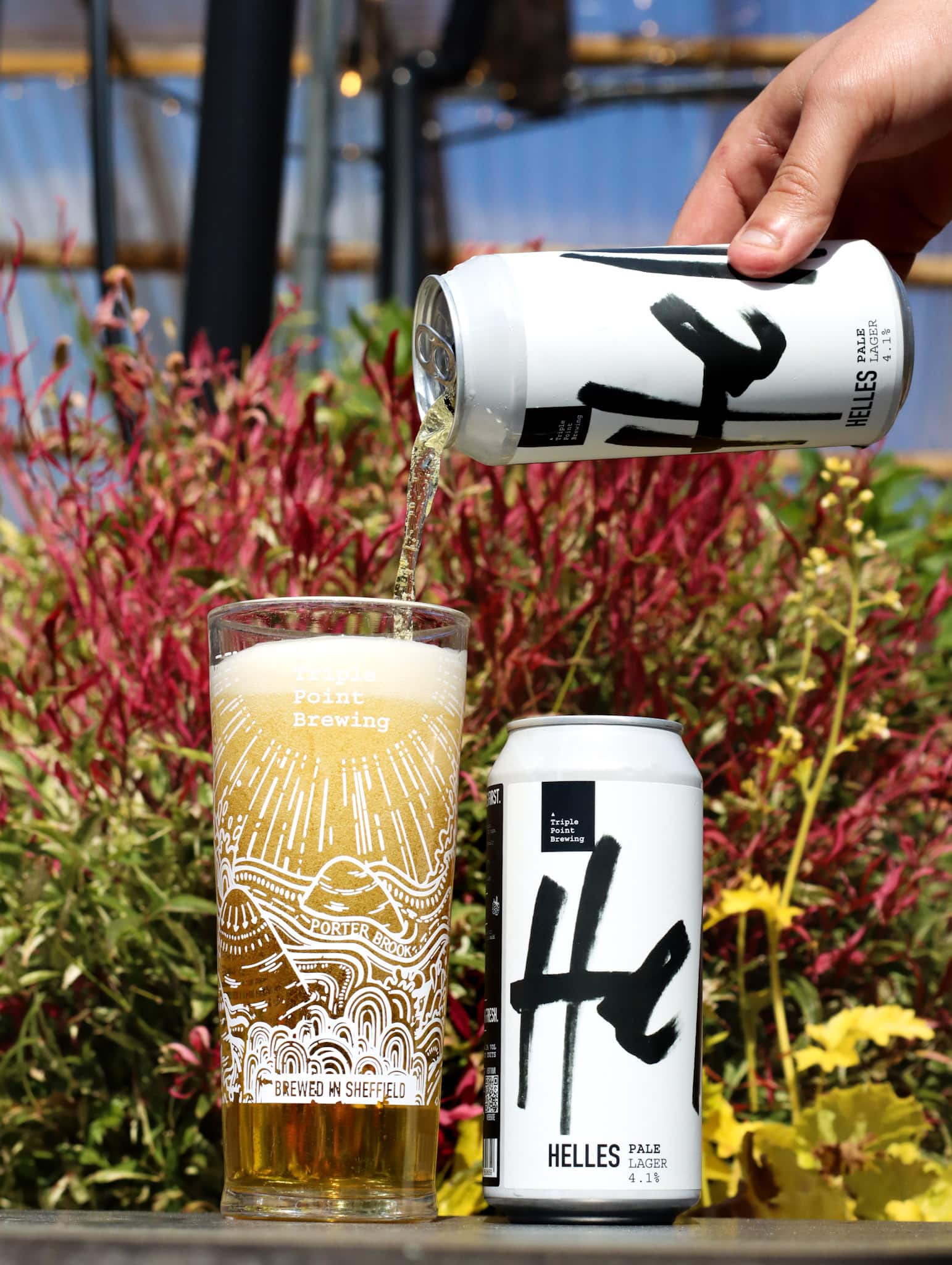
For example, our OG core-range lager, Helles, is a cold, crisp, refreshing session Helles lager – our take on the traditional German-style.
Whereas our newest member of the gluten-free core range, Briganti, brings something a little different. Inspired by Italian-style lagers, Briganti carries smoother, floral, malty characters.
Where does lager come from?
Beer has been brewed for thousands of years. But the lager we know and love today came much later.
Lager is traditionally associated with Bavaria in southern Germany. The name "lager" comes from the German word lagern, meaning "to store" - referring to the practice of storing beer at cool temperatures during fermentation and maturation.
Before modern refrigeration, brewers in Central Europe only brewed in the cooler Spring and Autumn months, then stored the beer in naturally cold environments like cellars and caves.
Over time, lager yeast was created by the spontaneous hybridisation of ale and wine yeasts, which in these cooler conditions favoured bottom-fermenting lager beers and developed the clean, crisp character we now associate with lager styles.
Bavarian brewers became the first industrial users of modern refrigeration, allowing them to brew their cold, refreshing beers all year round.
At Triple Point, we have the benefit of their experience, modern equipment and our own desire to create new and different lagers and ales to push the boundaries of flavour and refreshment.
Cheers! #TheBeerComesFirst