

Blog

12th May 2020
Pilsner
Alex, our Head Brewer, was truly bitten by the Bohemian Pilsner “bug” when working for Staropramen in Prague, back in the 90’s. He’s been on a mission to perfect a craft homage to the style ever since.
Sheffield has superb soft water, fresh from the northern peaks, similar in fact to Plzen water and ideal for brewing lagers.
Not surprisingly then, Pilsner (Czech-style) was Triple Point’s gyle, or brew number -001. Although, as it takes such a long time to properly “lager” it certainly wasn’t the first beer we got to drink!
The Pilsner tasted great and was soon a firm favourite with the rest of the team and in our taproom, but we gradually realised we hadn’t got it quite right. The beer always behaved beautifully at the brewery tap, but it would sometimes “fob” excessively when we packaged it into kegs or cans and sent it elsewhere. Trying to understand this pattern of “mis-behaviour” and getting feedback from people who said they loved the taste of the beer, but just couldn’t cope with the amount of foam, has nearly driven us nuts.
Not only that, but we decided that we had got the name wrong too. We generally like simple beer names that “tell you what’s in the can” but ‘pilsner’ is probably the most over-used and abused word in common beer language. How can people know what to expect when so many beers that have no similarity or right, claim a bit of the pilsner heritage, when most of them aren’t even Bohemian style pilsners. In fact the Czechs complained to the Germans about calling their tribute lagers pilsner, as they clearly weren’t from Plzn. The compromise, pilsener (in the pilsner style) was adopted.
So, after kicking the problem around over many an after-work beer, we decided we had to go back to basics. Could we evolve the beer, retaining all that we loved yet make it more... Well just more?

Including A Twist
We were determined to stay faithful to the Bohemian style, but also to retain a couple of “twists” that make it ours and not just a pale imitation. We use floor malts from England’s oldest working maltings, appropriate we think, because it was English progress in malting techniques and development of pale ales that enabled Josef Groll to brew the first Pilsner (the World’s first ever pale lager). Ask any Czech brewer and, given the choice, they will select floor malts for a genuine Ležak (Pilsner lager), so we did. We also dry-hop our pilsner. This practice, adding more hops during late fermentation or conditioning, is normally used in IPA’s and pale ales and allows intimate contact between the hop essential oils and the beer to maximise flavour and aroma. Lagers are not normally dry-hopped.
Alex went over for the hop harvest at the end of August 2019 and was treated to the best of Czech hospitality. Starting with the beer, “Oh, the beer!” Two nights and a full day on the farm gave him the insight he wanted into the delicate, fragrant, yet spicy hops which add so much distinctive, authentic character to our beer. From field to kiln, to bale he was, with humbling modestly, shown everything, including the restored hop museum kiln, wood-fired and alight for the annual hop harvest festival. He came back buzzing.
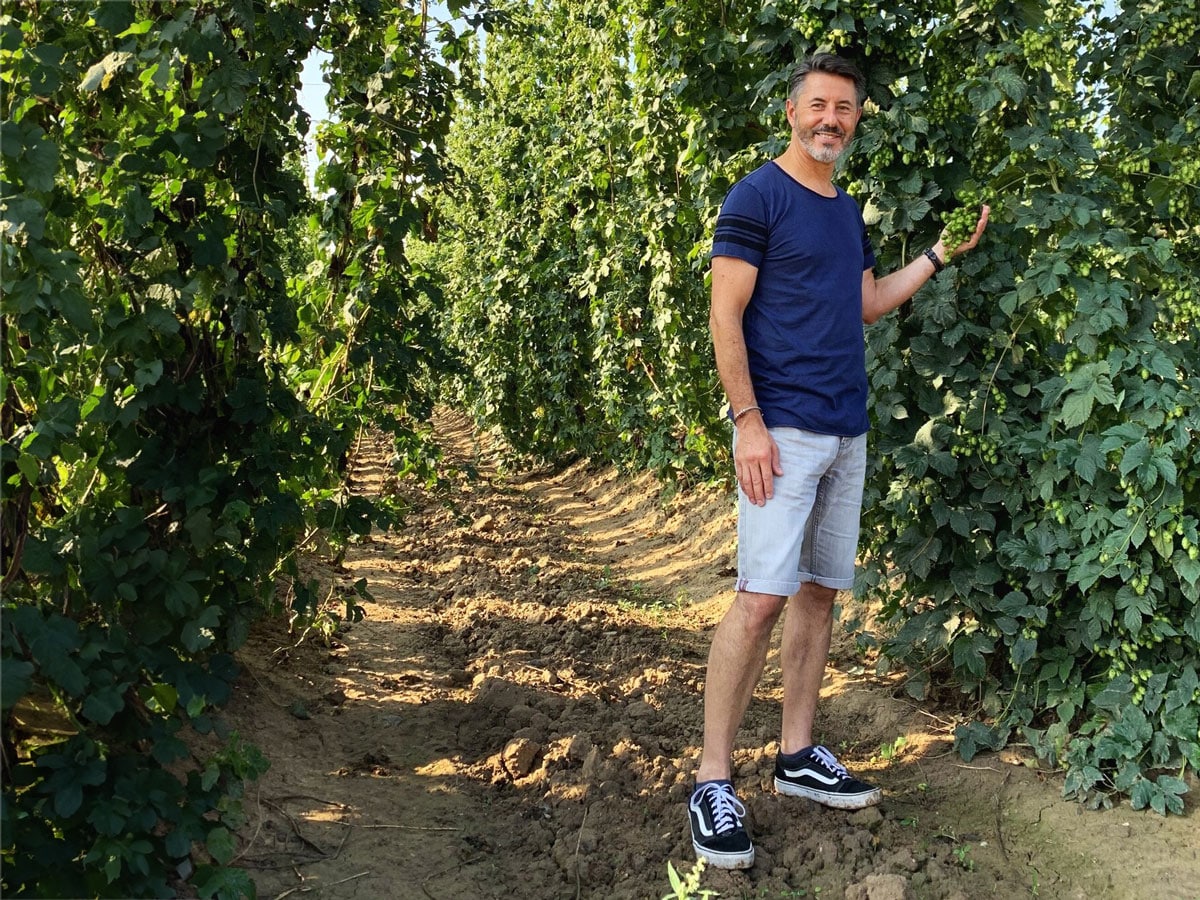
Žatec (pronounced zya-tets)
Alex re-thought our recipe and every detail of the brewing process, crucially adjusting the minute details of the softness of the water (liquor) and the dry-hopping in late fermentation to ensure the best conditions for flavour transfer to the beer. This ensures we re-ferment the additional sugars released as a result of dry-hopping, that may otherwise cause a phenomena known as ‘hop creep’, which sounds like a character in a nerdy beer mag, but was in fact the cause of our old fobbing problems.
Our ode to Bohemian pilsner is now different. The beer is a little stronger than the previous Pilsner (4.8% vs. 4.6%) and we think it’s now cleaner, slightly more crisp, but with more character at the same time. Drunk cold it is as refreshing as any fine lager, but as it warms in the glass (if you can leave it that long) the richness biscuit and caramel flavours of floor-malted barleys plays foil to the freshness of the hops, delicate and floral, yet at the same time spicy and with hints of tropical lemongrass and fruit. It was clear to us all that our Bohemian style pilsner, which owes so much of its character and its heritage to the hops, should be named after them.
Pilsner is now Žatec. This does now tell you what is inside the can. And the handwriting of Žatec on the outside of the can, belongs to Petra.
Cheers! (or in Czech,Na Zdravi!)