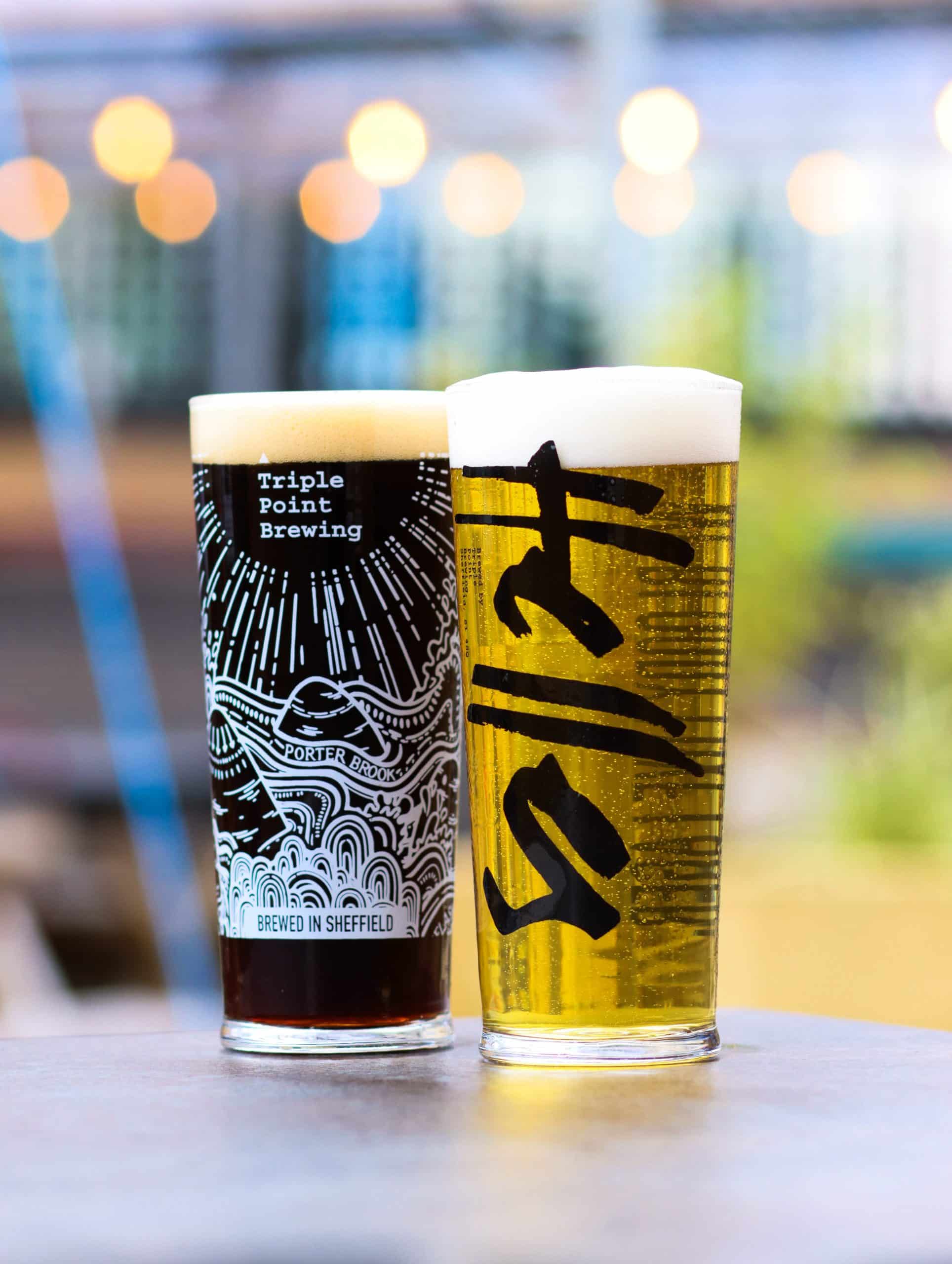
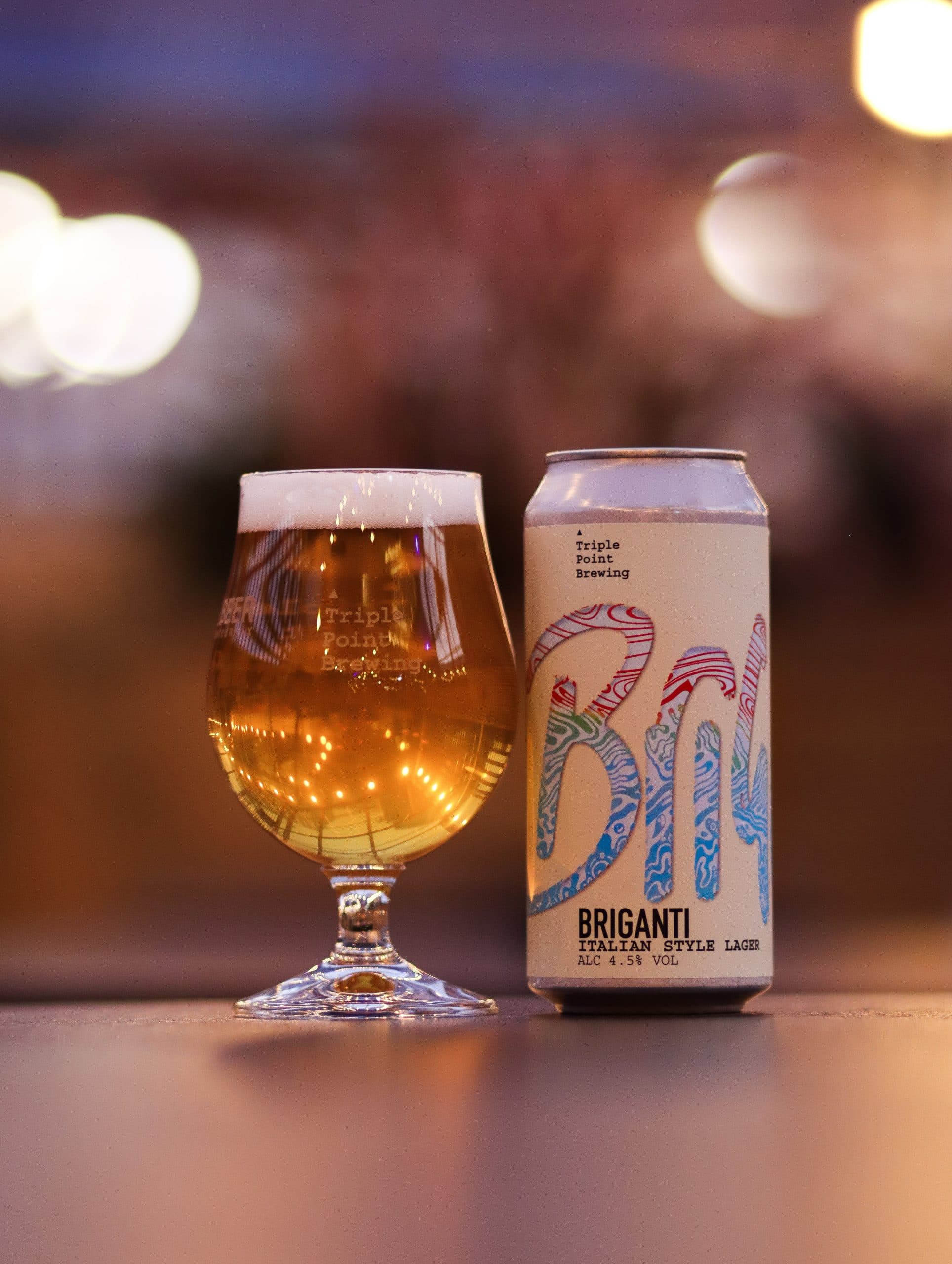
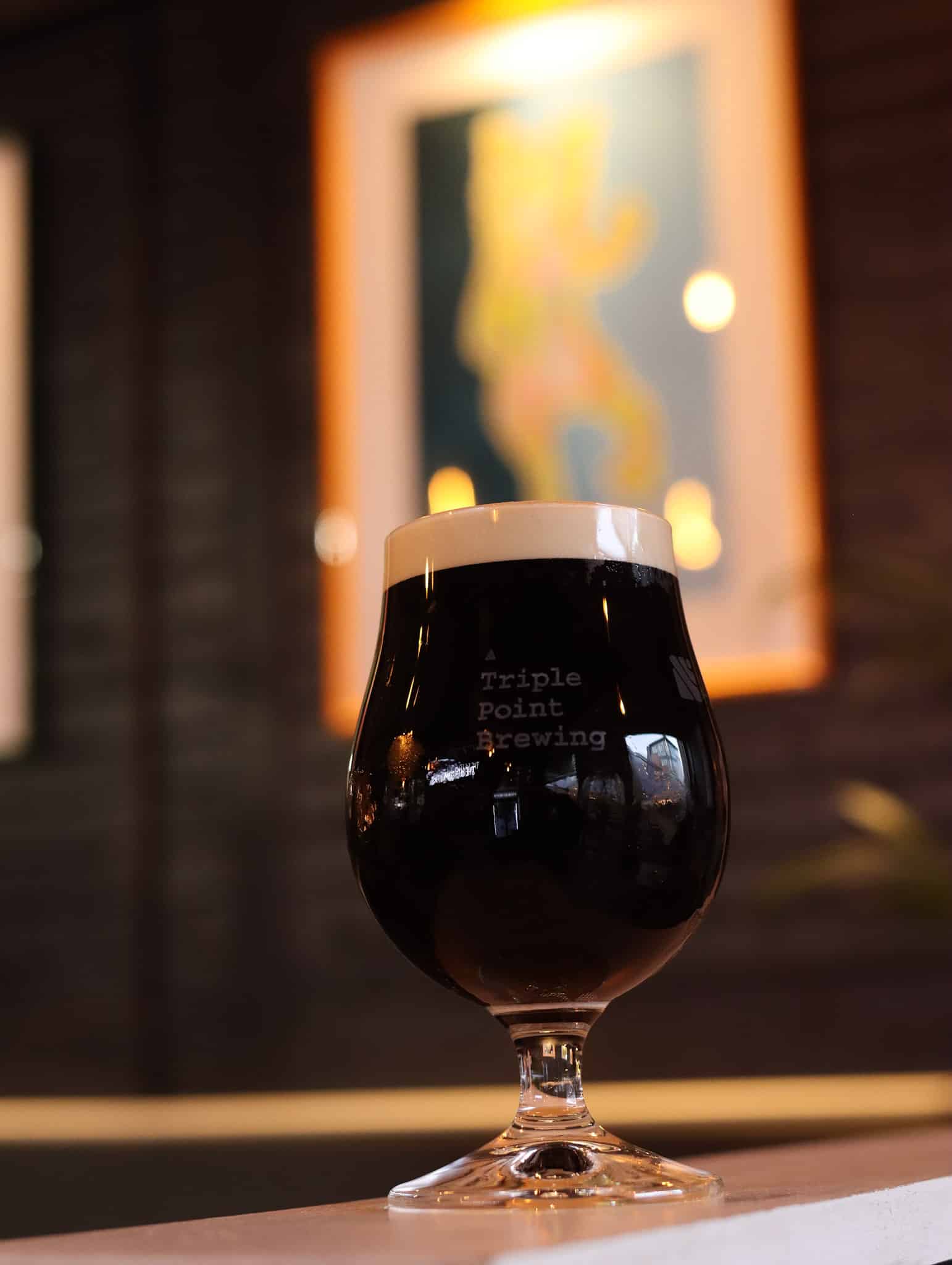
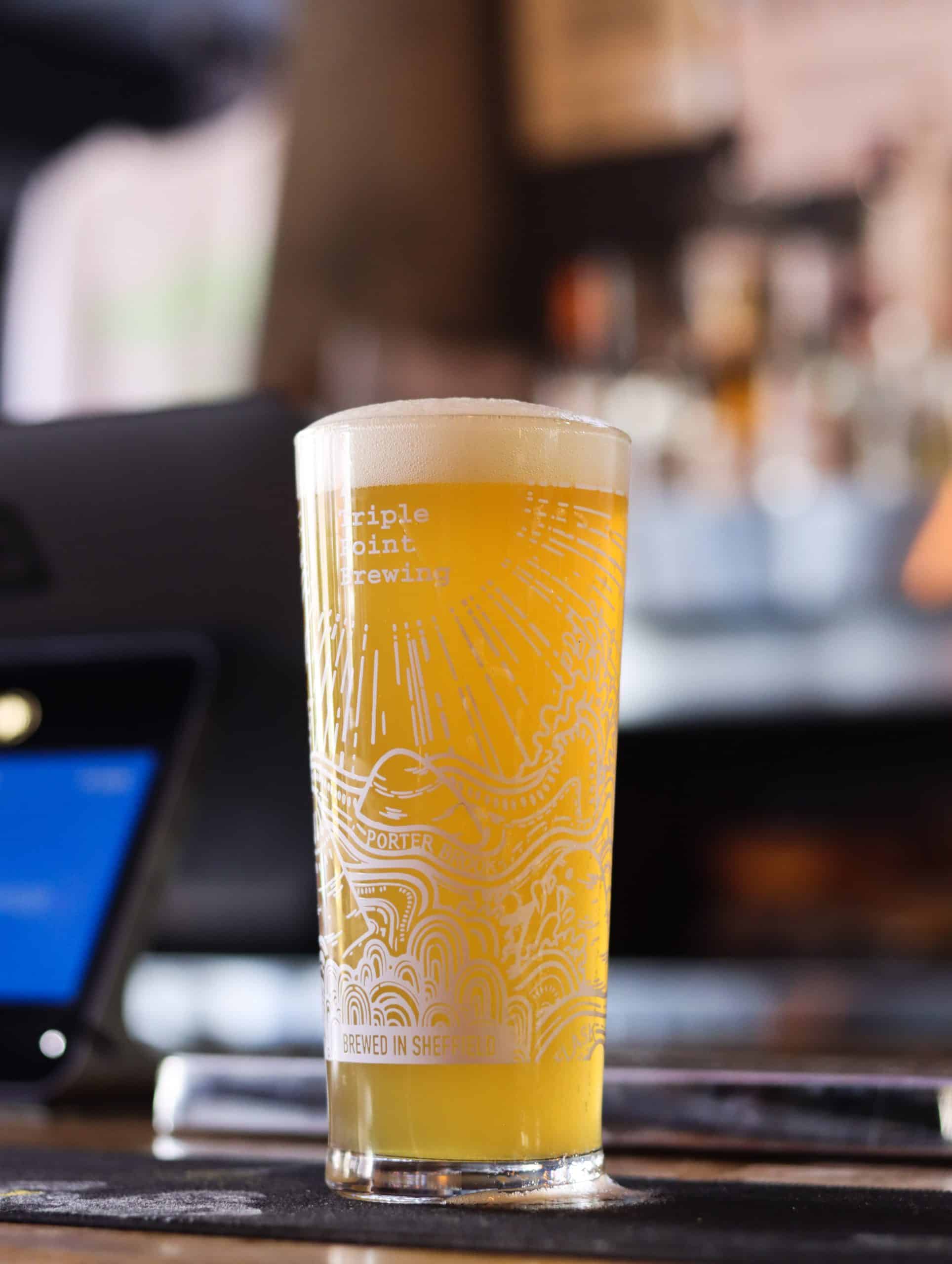
Our Head Brewer says brewing beer is Alchemy – part art, part science, and part magic. It’s all about playing inspirations with the occasional bit of, “Well! Let’s see what happens if we do this…”
And that’s exactly how our new Belgian Saison, Bergamo, came to life.
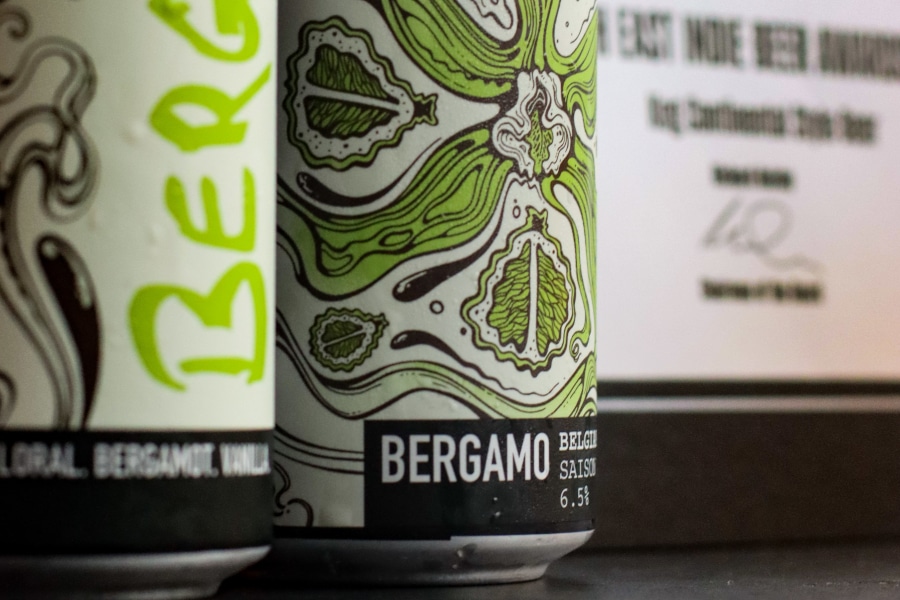
BERGAMO: 6.5% BELGIAN-STYLE SAISON
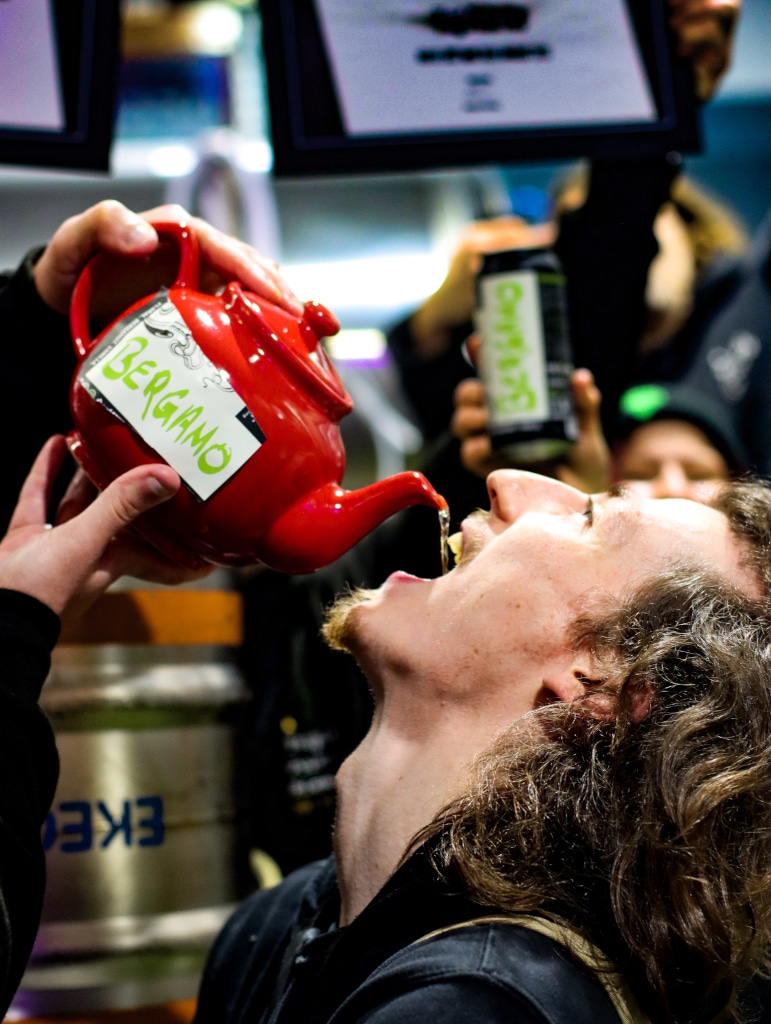
When our Head Brewer, Alex, travelled to Mauritius late last year, he visited a tea plantation. And, while most people would go on holiday to relax, switch off from work, and enjoy the tea, Alex’s brew-brain started fermenting…
Two flavours of tea stood out to him: Earl Grey (which uses a citrus fruit grown and named in Bergamo, to give it its unique flavour) and vanilla, and he couldn’t stop thinking about how those flavours could translate into a beer.
So, when he got home, he did what he does best – he brewed a new beer for us at Triple Point Brewing. Combining those two unforgettable flavours into this classic Belgian Saison-style pale ale.
We weren’t sure about the flavours at first. It was also our first-ever attempt at a saison, so we were at least expecting to pilot a simple recipe. But we let Alex do his thing. And we’re so chuffed we did, because not only does it taste incredible, but it also won two big awards at the SIBA North East Indie Beer Awards 2026!
Gold – Keg Continental Style Beer
Overall Champion of the Keg Beer Competition – Silver
SO… WHAT IS A BELGIAN-STYLE SAISON?
Saison is a traditional ale from (you guessed it) Belgium, specifically, from the French-speaking region of Wallonia.
It falls under the broad “farmhouse-style ale” category and is generally known for its refreshing qualities and fruity, spicy, peppery notes.
Appearance: Usually a gold to light amber hue. Though this can vary depending on how much malt is added to the brew.
Flavour profile and aroma: Fermentation fruit notes, with a medium bitterness balanced by a malty profile from a variety of grains and some noble hop character.
Body and mouthfeel: Light to medium body with a dry, crisp finish. Belgian saisons are highly carbonated compared to other pale ale styles, as they were originally bottle-conditioned, making them extra refreshing.
Strength: Generally, Belgian saisons have moderate strength, ranging from around 5% to 8%. However, you can usually find higher or lower strength variations, too.
HOW DID WE BREW OUR BELGIAN SAISON, BERGAMO?
Bergamo combines three malted barleys, along with wheat and oats, and a generous helping of English First Gold, German Mittelfruh, and Strisselspalt hops, chosen for their floral and citrus aromas.
What really sets Bergamo apart is the Belgian yeast, which gives the saison a gentle spicy character and a subtle peppery note on the nose.
So, how did we brew it?
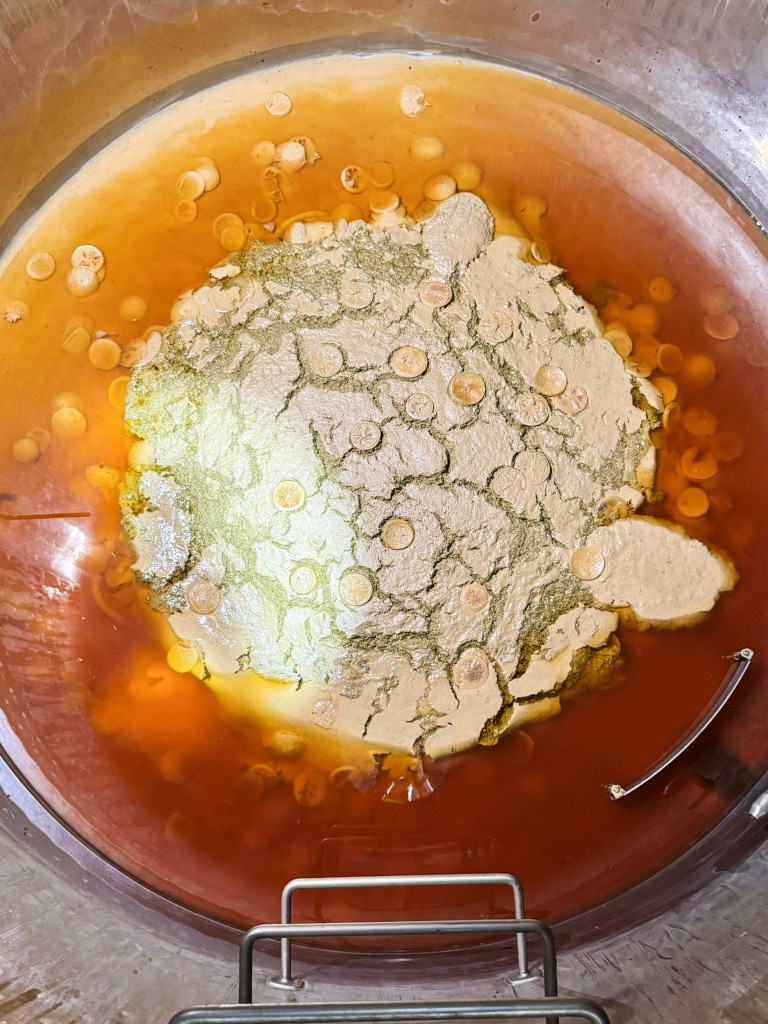
We added dried bergamot slices (and lots of them) to the whirlpool. Then, I layered bergamot juice, zest, and vanilla paste during fermentation. This helped create its complex but delicious flavour.
Now, you might be thinking “that’s a lot of grain for a gluten-free Belgian Saison?” – and you’d be right.
A high-grain bill is key to achieving the body and flavours required by a Belgian Saison.
To make it a gluten-free Belgian Saison, we added DeHaze, a branded terminal proline protease enzyme that prevents the formation of gluten from natural grain proteins during fermentation.
Like all our beers, Bergamo is lab-tested to ensure gluten levels are below 20 ppm. Meaning it meets the recommended gluten-free standards – without compromising flavour.
WILL I LIKE A BELGIAN SAISON?
Every palate is different, of course. But without sounding biased, you’ll love Bergamo. Overall, it’s a great palate-cleansing, punctuation beer and a good shout all round, whether your usual go-to is a Pale Ale or Czech Pilsner.
Drinking it at home? Find Bergamo here in our shop. We also recommend serving it in a tulip glass for ultimate drinkability and to let that lovely aroma billow out.
Who says Easter’s just for kids?! Sure, little ones might get a bit more egg-cited about the Easter egg hunts and baskets, but let’s be honest – we adults love chocolate just as much! So why should they have all the fun?
The good news is, Easter isn’t just about cute little bunnies and DIY bonnets – there are grown-up ways to have fun too!
Our personal favourite? A beer and chocolate pairing night!
While it might not be an obvious choice, it’s a surprisingly good one at that! Because much like peanut butter and jelly, beer and chocolate complement each other in all the right ways.
And the best part? It’s low effort and super easy to run! Here’s a simple way to do it:
FIRST UP… LET THE PLANNING COMMENCE.
Now, if you’re thinking “where do I even start?” – don’t stress. Planning a beer-and-chocolate pairing night is super easy. You don’t need to be a beer sommelier or craft beer expert, nor do you need to be Willy Wonka – you need to be open-minded and have a little creativity!
Start by nailing the essentials: time, date, budget, invitations… all the usual events planning bits and bobs. Once that’s sorted, it’s onto the fun part.
Head to your local supermarket or start shopping online because it’s time to sample the goods. You should choose a selection of different beer styles and a range of chocolate strengths to help you figure out which pairings work best. And, given it’s Easter, why not throw an Easter egg or some Mini Eggs into the mix?
TIP: All our beers are vegan and gluten-free and available on our web shop. Be sure to check them out if you have any dietary requirements.
SO, WHAT MAKES A GOOD PAIR?
The answer is simple: it’s all about balance and whatever tastes good to you. But, as a handy rule of thumb, you should match the intensity of the beer with the intensity of the chocolate. For example:
Light beer = white chocolate
Medium beer = milk chocolate
Dark beer = dark chocolate
It can really be as simple as that!
TIP: Chocolate’s characteristics can complement or contrast with different beers. So, if you’re feeling creative, you can always explore this further!
CHOOSING YOUR PAIRINGS
We teamed up with our Sheffield pals, Bullion Chocolate, for a beer-and-chocolate tasting event. The quality of both the beer and the chocolate went down incredibly well with attendees – here’s what we went for:
HELLES + WHITE CHOCOLATE
Light, crisp and refreshing meets smooth and creamy.
Bullion doesn’t craft a white chocolate in bar form, but they do offer a white drinking chocolate – it’s still chocolate, right? Anyway, after a bit of taste testing, we found it paired beautifully with our 4.1% gluten-free Helles Lager.
Both were light and refreshing, with a satisfying contrast between the lager’s crispness and the chocolate’s silky smoothness. So if you’re looking to include a white chocolate in your pairings, lager is a good choice!
Where to buy: You can find Triple Point Helles Lager on our website, and Bullion’s full chocolate range is available via their website too.
We also recommend trying Bullion’s Hallmark White Drinking Chocolate if you like a good hot chocolate!
BROOK + MILK CHOCOLATE + CHOCOLATE BROWNIE
For our second pairing, we wanted to offer a chance to compare and contrast flavours, so we included two chocolates: Bullion Hallmark Milk and Cookie Dough Brownie (from their cafe, Chocolate Bar). Both were paired with our Honey Porter – Brook.
Both treats were rich, smooth, and creamy, yet offered subtle differences when enjoyed alongside Brook. The milk chocolate complemented the honey’s gentle sweetness, while the brownies’ fudgy texture created a super-indulgent mouthfeel. Brook also provided enough contrast to cleanse the palate between sips, allowing flavours in both pairings to shine.
Where to buy: Brook is currently unavailable, but you can find similar porters online. They’re typically more common in Autumn and Winter, so keep an eye on our web shop during those months to see what we have available.
Chocolate-wise, you can grab Bullion’s Hallmark Milk here.
TIP: Fancy 10% off your first order? Sign up for our mailing list and be the first to hear about our latest beer releases.
ASTRAL AND ENRICHED MOCHA
Astral is our core range gluten-free, vegan nitro stout. It’s a sessionable 4.1% and packed with 10 grains and nitrogen for a smooth, velvety pour.
We paired Astral with Bullion Enriched Mocha Bar – and for many, this was a standout combination.
The coffee notes in the stout echoed beautifully with the mocha chocolate. And the mouthfeel tied everything together, making it feel like a pudding in a glass!
Where to buy:Astral is available on our website year-round. If you’re a fan of dark beers, we highly recommend giving it a try! Must-try Bullion Enriched Mocha Bar is available here.
NAZCA + ENRICHED SEVILLE ORANGE
We love pale ales here at Triple Point, so we had to add one of our seasonal brews to the mix…
We chose our zesty bucket list beer – Nazca to pair with Bullion’s Enriched Seville Orange chocolate bar.
The citrus-hoppiness of Nazca complemented the Seville orange wonderfully and provided a bright contrast to its silky-smooth texture.
All in all, it was a super vibrant, refreshing pairing. It went down well!
Where to buy: Nazca is currently out of stock – our rotating range doesn’t last long! While it may return in the future, don’t hold off on trying one of the other pale ales we have in the meantime – there’s some really interesting tasting notes to choose from. Check out our online shop here. Bullion Seville Orange – Dark Enriched Bar is available here.
LUXE SALTED CARAMEL + ENRICHED WHISKEY NIBS
We ended our beer-and-chocolate pairing event on a note of luxury.
Our decadent vegan and gluten-free chocolate porter, Luxe Salted Caramel (7%), is already a fan fave, but it was really elevated when paired with Bullion Whisky Nibs Enriched Bar. We found that the salted caramel notes enhanced the “nibbly” whisky nibs while the cacao nibs, in turn, amplified Luxe’s rich, salted caramel sweetness.
We had a few non-whisky drinkers in our crew, too, yet even they were surprised at how tasty this boozy combo was!
Where to buy: Luxe Salted Caramel will be available alongside our classic Luxe Chocolate and Vanilla Porter in Autumn/Winter 2026. Bullion’s delicious Whisky Nibs – Enriched Bar is available here.
ANYTHING ELSE?
If you want to nerd it out, we always find it helpful to write some tasting notes of both the beers and chocolates to give to your guests. It’s worth giving them an extra sheet of paper and a pen to make notes, too!
So, there you have it. Some 18+ Easter inspiration! Fancy giving it a go? Tag us in your posts on social as we’d love to see!
LIKE THIS POST?
Check out our guide to pairing beer with cheese for Christmas. There are a few extra tips in there that can help!
Cheers!
#TheBeerComesFirst
Think “hoppy” means “bitter”? You’re not alone! It’s a super common misconception.
But while the terms may be related, they have different meanings. And understanding the difference between them can totally change how you taste and describe beer.
Defining Hoppiness In Beer
We all know beers contain hops – hops are one of the core ingredients in brewing, even in our gluten-free beer. But just because beer has hops, it doesn’t mean it all tastes hoppy.
With around 250 hop varieties out there – each carrying its own flavour and aroma properties – it’s impossible to pin down one universal definition of “hoppiness”.
Some hops are citrussy.
Some are more berry or tropical fruity.
Others are piney, earthy, or spicy.
Some are subtle, others are intense.
That’s why happiness can’t be pinned down to one flavour.
We’d describe hoppiness to be the total amount of flavour, aroma, and bitterness that comes from hops (most of this comes from the lupulin – yellow powdery glands which contain flavour active substances – found inside the hop cone).
Defining Bitterness In Beer
Bitterness is best described as a sharp, pungent flavour that balances sweetness in beer. It’s one of the five basic tastes (along with salty, sweet, umami, and sour).
Bitterness mostly comes from the alpha acids in hops. It often gets stronger depending on how long the hops have been boiled for. So, the earlier hops are added in the brewing process, the more assertive the bitterness.
How do we measure bitterness in beer?
The International Bitterness Units (IBU) are a scale that quantifies the bitterness levels (of iso-alpha acid compounds) in beer.
That said, bitterness is subjective. Some people like it, some people don’t!
So, while we technically know how bitter a beer is, how bitter people perceive it to be is a different story.
The Difference Between Hoppy and Bitter Beers
In short:
Hoppiness covers a broad range of flavours and aromas that hops bring – like citrusy, fruity, piney, earthy, floral, and more. This can also include bitterness.
Bitterness is just one aspect of what hops can contribute.
Hoppy Beer Styles
India Pale Ales (IPAs) originated in the 1700s in England, where beer was heavily hopped to preserve it during its journey to merchants in East India. The beer style grew incredibly popular, and today, it has an extended family of new styles popping up all over the world!
Double IPAs (also known as Imperial IPAs) were adapted from the US in the 1990s. Expect a big, bold, and intensely hoppy aroma and flavour… and a stronger ABV. So, grab a glass of water too!
New England IPAs: (from the hazy pale ale family) known for prioritising hop aroma and flavour with a juicy, fruit-forward background. They tend to be a lot softer, cloudier, and less bitter than other styles of IPA.
Pale Ales: typically hop-forward, but lighter and more approachable.
Pilsners: the hoppiest of the lager family. With a clean and crisp hop character.
Bitter Beer Styles
India Pale Ales: Thanks to their high hop content, IPAs are typically one of the more bitter beer styles. But not all IPAs are created equal! The style has branched out massively with more and more breweries experimenting with hops and brewing techniques.
For example, West Coast IPAs are heavily hopped to reach a higher IBU – often scoring over 100. They’re known for a firm, lingering bitterness and resinous pine notes.
Whereas New England IPAs are still packed with hops, but focus more on juicy, fruity flavours and aroma instead of bitterness.
Traditional English Bitters have a lower ABV, are malt-balanced, and are moderately bitter, often with earthy English hops.
American Barleywines: high in both ABV and IBUs (often 60-100 IBUs), with a bold hop bite compared to sweeter English barleywines.
Ok, so you drink a lot of beer. But how much do you know about what’s in your pint?
The truth is, there’s so much more to beer than just hops, style, and ABV%. But they’re the ones getting all the attention. You don’t hear people talking about much else.
However, at its core, beer is made from four main ingredients – water, hops, yeast, and the unsung hero – malt.
But what is malt exactly? And more importantly, is malt gluten-free?
In this blog, we’ll cover everything you need to know about malt (what we term the backbone of beer).
From what types of malt are used in brewing, to why we love Maris Otter malt at Triple Point Brewing, and how it fits into our gluten-free beer.
So! Let’s get started.
WHAT IS MALT?
Malt is a cereal grain that has been prepared for brewing through a process called malting.
In most cases, the go-to grain for malt is barley (malted barley) because it creates a perfect structure for brewing.
However, other grains, such as oats, rye, and wheat, are sometimes malted and used in brewing as well (usually when attempting to achieve unique flavour characteristics or mouthfeel).
WHY MALT?
Malt is the backbone of beer, simple. Without it… Well, we couldn’t brew beer!
Malt creates the ideal base for fermentation to occur. Activating all the natural enzymes to help convert starches into sugar, which the yeast then converts into alcohol. So, yeah – it’s a big deal.
Additionally, malt contains other nutrients that the yeast needs, such as proteins, lipids, vitamins, and minerals. It’s like a health food for yeast!
But, there’s way more to malt than just kicking off fermentation.
Malt provides all sorts of characteristics that make beers unique and consistent, such as:
Colour: from blonde to gold, amber to brown, and black, different styles of malt affect a beer’s appearance.
Aroma: Malt also affects how beers smell, ranging from grainy to coffee-like and everything in between.
Flavour: From crisp lagers to roasted stouts, we can never underestimate the malt’s impact on beer flavour.
IS MALT GLUTEN-FREE?
Short answer, no – malt isn’t gluten-free. It’s made from cereal grains naturally containing gluten.
But here’s where it gets interesting. Here at Triple Point, our entire range of beer is gluten-free, despite using malt.
HOW SO?
We use an enzyme in our brewing process that breaks down the gluten protein. Bringing the levels under the threshold of <20 ppm.
It’s therefore safe for consumption for most people sensitive to gluten (not everybody – it’s important always to check first!!!).
You can read more about how we brew our gluten-free beer here.
WHAT MALT DO WE USE?
We use loads of malted barley here at Triple Point.
But we don’t just use any malted barley. We’re big fans of Maris Otter – a heritage variety known for its depth of flavour, exceptional brewing performance, and consistent quality.
Maris Otter is our go-to base malt, accounting for approximately 70% to 90% of all the malt we use.
WHERE DOES OUR MALT COME FROM?
We source Maris Otter malt from our good pals at Simpsons Malt – a family-run B Corp that’s been crafting malt since 1862 at their plants in Scotland, Berwick and East Anglia (as you can imagine, with all that experience behind them, they’re pretty good at what they do).
In addition to running three maltings, Simpsons own six grain stores across the UK. With five of them based in Scotland, they are local to most of their contracted barley growers.
We recently visited their Tivetshall Maltings and a couple of Maris Otter farms located near the Norfolk-based site.
From growing the crops to sealing the finished product, we got a firsthand look at the care, science, and passion that go into developing and producing high-quality malt, long before it reaches our mash tun.
For us brewers, high-quality malt is crucial. It’s one of the most essential ingredients to get right as it significantly impacts the characteristics and consistency of each brew.
That’s why we only use Simpsons Malt. Their commitment to producing top-quality malt is second to none, and we know we can always trust the product.
HOW IS MALT MADE?
If you’ve ever wondered how barley becomes malt? It undergoes a very in-depth process.
Here’s how:
Barley intake and testing – Lorries arrive at the maltings with tons of barley grains. However, it’s not just taken for granted. Before the grain even enters the maltings, it goes through a ‘passport-styled’ intake where five random samples are ‘stain tested’ for quality indicators like:
Moisture
Germination capacity.
Pre-germination.
Nitrogen (protein) content.
The initial process takes about 20 minutes (per lorry). Then, if the barley meets the standards, it can be stored for up to a full year before the malting process begins. Barley, like all cereals, is an annual crop, so the grain harvested each summer has to last through to the next harvest.
Steeping: Barley needs to be dry for storage, but it has a high moisture content to begin germination. So, the grain first enters a process called ‘steeping’, where it gets soaked in water through cycles of ‘wets’ and ‘air rests’ to bring it up to the proper moisture level.
Germination: After steeping, the grain is transferred to germination vessels where it starts to sprout. This process can take up to five days. Simpsons look for three little roots called ‘chits’ to sprout. This signifies healthy germination and a go-ahead to proceed to the next step…
Kilning: Next, the germinated barley is dried in a kiln, stopping the germination process and restabilising its moisture content. Kilning also helps its flavour and colour develop.
Roasting: Special malts, such as chocolate or crystal, undergo an additional step called roasting. This helps intensify its flavours, adding sweetness, toast, or even coffee notes, depending on the roasting level.
Bagging: Finally, the malt is packed into 25kg or 1,000 kg bags, ready to be shipped to breweries, like ours, to brew a lot of delicious beer!
TYPES OF MALT:
There are numerous malt varieties available, each used to create different flavours, colours, and textures in beer. Here are some common types:
Base malts (like Maris Otter or Pilsner malt) provide fermentable sugars needed for alcohol. Making up the solid foundation of beer.
Vienna and Munich Malts are more often used in lagers or amber beers, offering more toasty, biscuity flavours.
Crystal Malts are often used to add sweetness, body, and colour. These are ideal for balancing more hoppy beers.
Chocolate and Black Malts are used in darker beer styles, such as stouts or porters. Adding hints of roasted coffee and chocolate notes.
FARMING MARIS OTTER
We love Maris Otter, and it turns out the farmers we met in Norfolk do too. Why? It’s a low-input crop, especially when it comes to nitrogen, which is not only key for healthy crop growth, but also for yeast health and fermentation. All of which has a direct impact on a beer’s flavour, mouthfeel and even head retention.
But, if only it were THAT easy…
Unfortunately, Maris Otter isn’t always the easiest crop to grow.
Compared to modern varieties, such as spring barley, farmers can generally expect lower yields from Maris Otter, which makes it more expensive; however, it is considered the best for Triple Point beers. The crop can also be susceptible to unpredictable weather, which is a common occurrence in the British climate.
That means farmers are working extra hard year after year, in the hopes of achieving a high-quality yield. Additionally, this means farmers are becoming increasingly dependent on brewers like us to meet demand. Without such demand, heritage varieties like Maris Otter may be seriously impacted in the future.
Every brewery has a core range. But we’re pretty proud of ours.
Our core range comprises six beers covering four distinct beer styles – all mid-strength, super sessionable, and brewed with easy drinking in mind.
Oh, and the best part? They’re all gluten-free beers. And mostly vegan too!
So, the lineup! We’re talking two lagers, two pale ales, a stout, and a golden ale. Each is branded with its name handwritten by a member of our team!
Anyway, enough small talk… let’s dive into the beers then, eh?
HELLES: 4.1% SESSION LAGER.
Let’s start with the legend! Helles is our first-ever core lager. One of the first beers we ever brewed – an OG Triple Point classic! It’s a traditional German-style lager that’s crisp and uber drinkable. It’s only 4.1%, making it super sessionable too.
There are many die-hard Cryo fans out there… we take that as a good sign. And we completely get it – we’re fan girls too.
We’ve always loved cryo hops. Since long before starting Triple Point! So, we did what we do best: we brewed a beer packed with ‘em.
Without sounding too nerdy, Cryo hops are a type of hop pellet created with cryogenics, designed by our good pals at Yakima Chief. They use super low temperatures and a high nitrogen environment to separate the lupulin (which contains all the hop oil) from the ‘green matter’, giving the pellets a more intense aroma and flavour!
So, as you can imagine, Cryo has a lot of flavour. And while it’s heavily hopped, it has a low bitterness. Making it easy to enjoy pint after pint!
A baby in our core range… Briganti. We call it our premium core lager! Brewed for the first time in 2024. And it’s going down an absolute storm already.
Brewed in honour of the “brigante” – a Roman name once used to describe the “hill people of Yorkshire” (that’s us!!!). It’s been a quick sell-out at beer festivals this year. And we get a lot of people calling into our taproom in Sheffield to try it.
Expect a crisp, Italian-style lager brewed with our lovely soft Sheffield water, gently toasted malts and mellow, fruity hops.
A peachy pale that goes down almost too nicely. Especially in the sun! It’s crisp, refreshing, and saturated with five cryo hops for a citrus hit!
Also new to our core range. Brewed with oats, wheat, and Maris Otter for that soft and pillowy finish.
Tasting notes: Citrus, peach, tropical.
Hops: Strata, Azacca, Mosaic, Centennial, Citra.
Vegan and gluten-free hazy pale ale.
Back available on our web shop soon.
GOLD: 4.1% GOLDEN ALE.
Sunshine in a glass? You got it in this golden ale!
Alongside Helles, Gold is one of the two beers that have been with us since our opening night over six years ago. A true Triple Point classic, and a strong team favourite for after-work beers.
Honeyed malts combine with citrussy Cascade and fruity Amarillo hops for a quenching, balanced bitterness. It’s a great beer all year round. Perfectly sessionable for summer, but also super enjoyable in the winter months.
Tasting notes: Light, bright, golden.
Hops: Admiral, Aurora, Cascade, Amarillo.
Dietary: Not always vegan (only vegan when poured straight from the tank at our taproom). But always gluten-free.
ASTRAL: 4.2% NITRO STOUT.
What started as a 10-grain stout evolved into a nitro stout late last year due to overwhelming demand.
Black as night with a head full of stars. Velvety smooth with subtle notes of coffee and chocolate. A nice, rounded body and creamy nitro pour that makes you wanna *Chefs kiss*.
We’re working on a way of canning this one (turns out getting nitro in a can is a beast), but for now, find it pouring at our taproom and stockists around Yorkshire + beyond!
Tasting notes: Smooth and creamy, with a stout character.
Hops: Admiral, Jester.
Dietary: Vegan and gluten-free stout.
VISITING OUR TAPROOM?
Well, first up, we can’t wait to see ya! And show you our range.
We’re based in Sheffield City centre (right near the station!), with a vast beer garden and taproom where you can enjoy a pint poured straight from the tanks whilst scranning on a Twisted Burger!
As we mentioned, all our beer is gluten-free, and almost all of it is vegan too. Plus, we’re not short on cocktails, spirits and alcohol-free options either. There is something for everyone.
While you’re here, defo check out the core range. But don’t just stick with it! Be sure to try some of our seasonal and rotational series as well!
Every year is another year of growth for us at Triple Point! But this year was a biggie. As we can now produce EVEN MORE beer!
A few weeks ago, we installed two new 7,500-litre brewing tanks to our brewery in Sheffield.
Not only does this expansion allow us to brew over half a million extra pints per year. But it means we’re in a better position to keep up with growing demand for gluten-free craft beers – especially in Sheffield.
Since opening Triple Point Brewing back in 2019 (almost six years ago), we’ve more than doubled our fermentation capacity. Now totalling over 500 hectolitres across the front and at the rear of the brewery – which is just utter madness to us!
We’re SO excited to welcome our giant new tanks to their new home. Especially just weeks before celebrating our sixth birthday. And we’re already overwhelmed by our customers’ responses to the huge equipment, as they admire it whilst enjoying a pint of tank-fresh beer.
Big thanks to our team and customers for helping us achieve this. You support means the absolute world and is key to helping us grow! Much love x
Glorioso, Italia! The land of pizza, pasta, gelato, and vino. But what about beer?!
Well. Italy’s craft beer scene has been booming in the last decade, with more independent breweries popping up. Experiment with different brewing methods and beer styles – especially cold, crisp lagers. Well, it gets pretty warm out there, right?
For the most part, Italian brewers have embraced a modern style of beer that combines traditional German methods with Mediterranean flavours and refreshments. We call this an Italian-style lager. Some craft versions are typically more hoppy in aroma, too.
What Is An Italian-Style Lager?
Like many of our beers in the UK, Italian-style lagers (also known as Mediterranean lagers) are inspired mainly by popular German-style Helles and Pilsners beers.
However, the Italians have adapted the beer style to be lighter, smoother, and less bitter. Making it more enjoyable to sip under the sweet Mediterranean sun.
They use more malt and hops to create the lagers fruitier than other styles. They also brew at a higher fermentation temperature, making the lagers slightly sweeter, smoother, and easier to drink. It’s a summer dream!
Peroni and Birra Moretti are popular (non-crafty) examples in the local supermarket or pub.
OUR TAKE ON THE ITALIAN-STYLE
At Triple Point, we talked about how much we love an Italian-style lager. This got us thinking… we’ve brewed many lager styles, from German and Czech to Viennese, so why not brew an Italian one, too?!
And just like that. The eureka moment sparked. And Briganti – our vegan and gluten-free Italian-style lager, was born.
We decided to use German Hallertau Mittelfruh and American Cryo Loral hops for Briganti. This combination, used late in the brewhouse, gives the beer a gently hoppy aroma without the bitterness. It also provides the fruity characteristics the Italians love!
Of course, the key to a proper Italian lager style is in the mouthfeel. To achieve that, we use Maize and Golden Naked oats. Making it proper, smooth, and rounded. And everything you want from an Italian lager.
After a load of really great feedback, we decided to make Briganti one of our core beers. The beer even brought home the title of Silver in the Premium Lager category in the SIBA Independent Brewer (Bottle and Can) Awards in late 2024.
Not bad for our first pop at an Italian lager, eh?
So… Why Briganti?
The history of Sheffield and the surrounding areas doesn’t begin with steel! In fact, it dates way back to Roman times.
The Romans referred to Yorkshire as ‘Brigantia’, and its people as the ‘Briganti’ (translating to ‘hill people’). Which, to anyone who lives in, or even visited Sheffield, will agree it’s pretty hilly around here. With almost no routes for more than 5 minutes that don’t include some kind of hill.
So, when one of our team of history nerds read a book about the Roman conquest of Britain under Claudius in 47 AD and discovered that one of the main tribes resisting to the Roman invasion of Britain were the Brigantes… well, it got the creative juices flowing.
The Brigantes initially resisted Roman rule. But later, under Queen Cartimandua they decided to cooperate, even handing over the rebel leader Caratacus. Queen Cartimandua was later deposed, enabling the Brigantes to revolt against Rome before eventually being under direct Roman control.
We had no idea there was so much Roman influence in the Sheffield area! (it might also not have been precisely in modern-day Sheffield, but we’re going to take some creative license here and say that it was).
So, when the time came to name our Italian lager, there was only one choice: a tribute to the early Italian collaboration with the Hill People of Sheffield. Briganti!
BRIGANTI
4.5% Italian-style lager.
Crisp. Fruity. Mellow.
Crisp, Italian-style lager brewed with soft Sheffield water.
Vegan and gluten-free.
Gently toasted malts and mellow, fruity hops – Hallertau Mittelfruh and Cryo Loral.
As January rolls around, so does Veganuary—a growing trend encouraging people to try going vegan for a month.
In 2024, a record-breaking 24 million people signed up for the movement! With that comes a wave of new vegan products and information from all kinds of brands. Exciting stuff!
At Triple Point Brewing, we haven’t just released a vegan beer for Veganuary – most of our beer is already vegan. However, we often hear misconceptions about vegan beer, so we thought now was the perfect time to debunk the myths we hear about the most. Here goes…
Myth 1: All Beer Is Vegan
The truth: Nope! Not all beer is vegan.
Undoubtedly, vegan beer is becoming increasingly popular, but not all beer is vegan.
Many traditional brewing methods use animal-derived fining agents, like isinglass (made from dried fish swim bladders), gelatine, or casein to clarify the beer. Some beer styles also include non-vegan additives for flavour, like honey or lactose.
Vegan beer avoids all of these, opting for plant-based or synthetic alternatives (such as Irish moss, silica gel, or PVPP) instead. Some breweries even skip filtration altogether!
Myth 2: Vegan Beer Tastes Different
The truth: Wrong! Vegan beer tastes JUST as good as non-vegan beer.
The clarifying agents or sweeteners used in traditional brewing have little impact on flavour. This means vegan beers taste just as good. You’d be surprised how many beer lovers enjoy vegan beer without even realizing it!
Myth 3: Vegan Beer Is More Expensive
The truth: Nope, not necessarily…
The cost of making vegan beer is comparable to traditional brewing methods. In some cases, it’s even cheaper! Because skipping fining agents or using plant-based alternatives can reduce production costs.
The price you pay for your pint often depends on the brand, style, and strength of the beer – not its vegan status.
Myth 4: Vegan Beer Is Healthy
The truth: Ha! We wish!!
While vegan beer avoids animal products, it can still be high in alcohol, calories, or sugar. Being vegan doesn’t automatically make beer a “healthy” food. Plants can still contain a high amount of sugar, which converts to alcohol and isn’t exactly good for you.
As with anything… moderation is key!
Myth 5: You Can Tell A Vegan Beer Just By Looking At It
The truth: Ummm, no you can’t.
Can you tell if a beer contains honey just by looking at it? Of course not.
There’s no way to tell if a beer is vegan just by appearance. Some beers may be crystal clear, while others are hazy – regardless of if they’re vegan or not.
How can you find out if a beer is vegan? Check the packaging for certifications like the Vegan Society logo.
Like we do at Triple Point, many breweries highlight their vegan credentials on their websites – so keep an eye on the products in a brewery’s online store!
Cheers!
#TheBeerComesFirst
We use cookies to improve your experience. By using our site, you agree to our privacy policy.
Your chance to WIN a GILBERT INNOVO MATCH BALL
Terms & Conditions: To enter, you must select the Six Nations Booking Type. Book a table between 31/01/25 and 15/03/25 to watch any Six Nations match at our venue to be eligible for the giveaway. Only table bookings for Six Nations match viewings are eligible for entry. One winner will be selected at random and announced on 15/03/25. The winner may choose an Innovo rugby ball from the selection available at www.gilbertrugby.com, subject to availability at the time of prize redemption. The prize is non-transferable and cannot be exchanged for cash or any other alternative. Entrants must be aged 18 or over at the time of entry. Only one entry is permitted per table booking per day. We reserve the right to amend or withdraw the giveaway at any time without prior notice if circumstances make this unavoidable. By entering, participants agree to these terms and conditions.

 When our Head Brewer, Alex, travelled to Mauritius late last year, he visited a tea plantation. And, while most people would go on holiday to relax, switch off from work, and enjoy the tea, Alex’s brew-brain started fermenting…
Two flavours of tea stood out to him: Earl Grey (which uses a citrus fruit grown and named in Bergamo, to give it its unique flavour) and vanilla, and he couldn’t stop thinking about how those flavours could translate into a beer.
So, when he got home, he did what he does best – he brewed a new beer for us at Triple Point Brewing. Combining those two unforgettable flavours into this classic Belgian Saison-style pale ale.
When our Head Brewer, Alex, travelled to Mauritius late last year, he visited a tea plantation. And, while most people would go on holiday to relax, switch off from work, and enjoy the tea, Alex’s brew-brain started fermenting…
Two flavours of tea stood out to him: Earl Grey (which uses a citrus fruit grown and named in Bergamo, to give it its unique flavour) and vanilla, and he couldn’t stop thinking about how those flavours could translate into a beer.
So, when he got home, he did what he does best – he brewed a new beer for us at Triple Point Brewing. Combining those two unforgettable flavours into this classic Belgian Saison-style pale ale.
 We weren’t sure about the flavours at first. It was also our first-ever attempt at a saison, so we were at least expecting to pilot a simple recipe. But we let Alex do his thing. And we’re so chuffed we did, because not only does it taste incredible, but it also won two big awards at the SIBA North East Indie Beer Awards 2026!
 Bergamo combines three malted barleys, along with wheat and oats, and a generous helping of English First Gold, German Mittelfruh, and Strisselspalt hops, chosen for their floral and citrus aromas.
What really sets Bergamo apart is the Belgian yeast, which gives the saison a gentle spicy character and a subtle peppery note on the nose.
So, how did we brew it?
We added dried bergamot slices (and lots of them) to the whirlpool. Then, I layered bergamot juice, zest, and vanilla paste during fermentation. This helped create its complex but delicious flavour.
Now, you might be thinking “that’s a lot of grain for a gluten-free Belgian Saison?” – and you’d be right.
A high-grain bill is key to achieving the body and flavours required by a Belgian Saison.
To make it a gluten-free Belgian Saison, we added DeHaze, a branded terminal proline protease enzyme that prevents the formation of gluten from natural grain proteins during fermentation.
Like all our beers, Bergamo is lab-tested to ensure gluten levels are below 20 ppm. Meaning it meets the recommended gluten-free standards – without compromising flavour.
Bergamo combines three malted barleys, along with wheat and oats, and a generous helping of English First Gold, German Mittelfruh, and Strisselspalt hops, chosen for their floral and citrus aromas.
What really sets Bergamo apart is the Belgian yeast, which gives the saison a gentle spicy character and a subtle peppery note on the nose.
So, how did we brew it?
We added dried bergamot slices (and lots of them) to the whirlpool. Then, I layered bergamot juice, zest, and vanilla paste during fermentation. This helped create its complex but delicious flavour.
Now, you might be thinking “that’s a lot of grain for a gluten-free Belgian Saison?” – and you’d be right.
A high-grain bill is key to achieving the body and flavours required by a Belgian Saison.
To make it a gluten-free Belgian Saison, we added DeHaze, a branded terminal proline protease enzyme that prevents the formation of gluten from natural grain proteins during fermentation.
Like all our beers, Bergamo is lab-tested to ensure gluten levels are below 20 ppm. Meaning it meets the recommended gluten-free standards – without compromising flavour.

 The answer is simple: it’s all about balance and whatever tastes good to you. But, as a handy rule of thumb, you should match the intensity of the beer with the intensity of the chocolate. For example:
 Light, crisp and refreshing meets smooth and creamy.
Bullion doesn’t craft a white chocolate in bar form, but they do offer a white drinking chocolate – it’s still chocolate, right? Anyway, after a bit of taste testing, we found it paired beautifully with our 4.1% gluten-free Helles Lager.
Both were light and refreshing, with a satisfying contrast between the lager’s crispness and the chocolate’s silky smoothness. So if you’re looking to include a white chocolate in your pairings, lager is a good choice!
Where to buy: You can find Triple Point Helles Lager on
Light, crisp and refreshing meets smooth and creamy.
Bullion doesn’t craft a white chocolate in bar form, but they do offer a white drinking chocolate – it’s still chocolate, right? Anyway, after a bit of taste testing, we found it paired beautifully with our 4.1% gluten-free Helles Lager.
Both were light and refreshing, with a satisfying contrast between the lager’s crispness and the chocolate’s silky smoothness. So if you’re looking to include a white chocolate in your pairings, lager is a good choice!
Where to buy: You can find Triple Point Helles Lager on  For our second pairing, we wanted to offer a chance to compare and contrast flavours, so we included two chocolates: Bullion Hallmark Milk and Cookie Dough Brownie (from their cafe, Chocolate Bar). Both were paired with our Honey Porter – Brook.
Both treats were rich, smooth, and creamy, yet offered subtle differences when enjoyed alongside Brook. The milk chocolate complemented the honey’s gentle sweetness, while the brownies’ fudgy texture created a super-indulgent mouthfeel. Brook also provided enough contrast to cleanse the palate between sips, allowing flavours in both pairings to shine.
Where to buy: Brook is currently unavailable, but you can find similar porters online. They’re typically more common in Autumn and Winter, so keep an eye on our
For our second pairing, we wanted to offer a chance to compare and contrast flavours, so we included two chocolates: Bullion Hallmark Milk and Cookie Dough Brownie (from their cafe, Chocolate Bar). Both were paired with our Honey Porter – Brook.
Both treats were rich, smooth, and creamy, yet offered subtle differences when enjoyed alongside Brook. The milk chocolate complemented the honey’s gentle sweetness, while the brownies’ fudgy texture created a super-indulgent mouthfeel. Brook also provided enough contrast to cleanse the palate between sips, allowing flavours in both pairings to shine.
Where to buy: Brook is currently unavailable, but you can find similar porters online. They’re typically more common in Autumn and Winter, so keep an eye on our